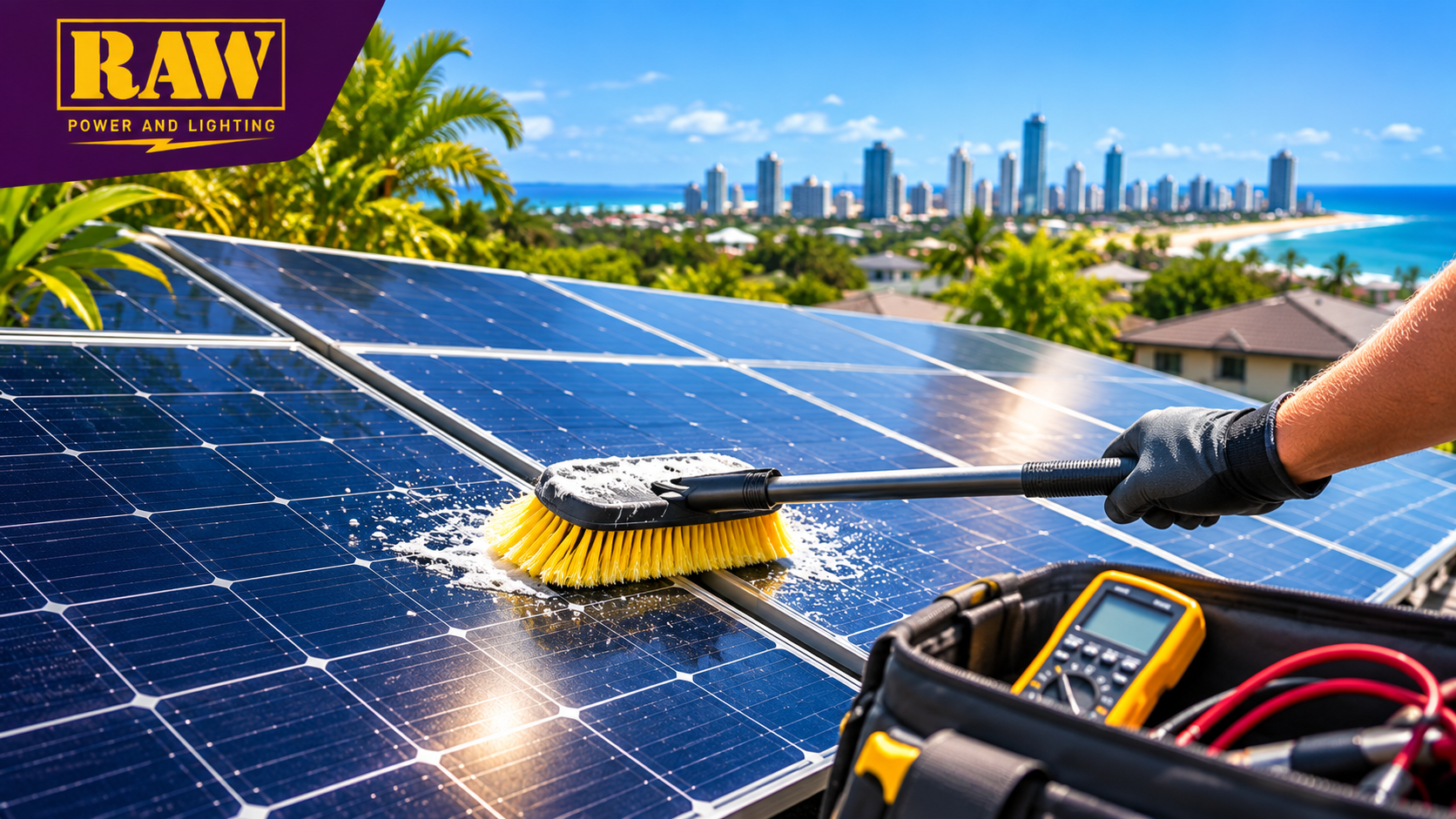
Installing solar panels is a significant investment for many Gold Coast homeowners. With Queensland’s abundant sunshine, a well-designed solar system can help reduce reliance on grid electricity and manage household energy costs.
However, installing solar panels is only the beginning. Like other electrical systems, solar installations need appropriate monitoring and maintenance to remain safe and perform efficiently over time.
From salt exposure near the coastline to summer storms, humidity, dust and fallen leaves, Gold Coast conditions can affect solar equipment in different ways.
Solar panel maintenance on the Gold Coast is about more than keeping panels clean. It also involves monitoring electricity generation, identifying inverter problems, checking for damage and arranging professional inspections when needed.
Whether your property is in Parkwood, Arundel, Southport or elsewhere on the Gold Coast, understanding how to look after your solar system can help you identify problems early and protect your investment.
In this guide, we’ll explore practical solar maintenance tips, common warning signs, cleaning considerations and when to contact a qualified solar professional.
1. Why Is Solar Panel Maintenance Important?
Solar panels are designed to operate outdoors for many years, but that doesn’t mean the entire system is maintenance-free.
A typical rooftop solar installation includes panels, mounting equipment, cables, electrical protection and an inverter. Some properties also have solar batteries or monitoring equipment.
Over time, environmental exposure, component deterioration or electrical faults can affect system performance.
Regular monitoring and appropriate maintenance can help:
- Identify reduced electricity generation
- Detect inverter warnings and system faults
- Identify visible damage after severe weather
- Assess the condition of electrical components
- Address excessive dirt or debris where necessary
- Support ongoing system safety
- Maintain relevant installation and warranty records
Not every solar system requires frequent professional cleaning, and maintenance requirements vary depending on the equipment, installation and environment.
The important thing is to understand your system and respond to changes rather than assuming everything is working correctly.
2. How Often Should Solar Panels Be Maintained?
There is no single maintenance schedule suitable for every solar installation.
The appropriate frequency depends on the manufacturer’s instructions, the system’s age, its location, environmental conditions and previous inspection findings.
For example, a home close to the ocean may experience different environmental exposure from a property surrounded by trees in a sheltered suburban street.
A practical approach includes regularly reviewing your solar monitoring information, looking for obvious problems from a safe location and following the inspection schedule recommended by the installer or manufacturer.
Professional inspections may also be appropriate following severe weather, unexplained performance changes or suspected electrical faults.
Important: Homeowners should never climb onto the roof or open solar electrical equipment to carry out maintenance themselves.
A qualified professional can determine what work is needed and whether any cleaning, testing or repairs are necessary.
3. Keep an Eye on Your Solar System’s Performance
One of the simplest ways to identify a potential problem is to monitor how much electricity your solar system generates.
Many modern solar inverters include an app or online monitoring platform that allows homeowners to review daily, weekly and monthly generation.
Some systems also provide information about household consumption, grid exports and battery operation.
When reviewing performance, consider:
Seasonal changes: Solar generation naturally varies throughout the year as daylight hours and sun angles change.
Weather conditions: Cloud cover, rain and storms can significantly reduce generation on individual days.
Shading: Growing trees, neighbouring structures and other obstructions can affect output.
Household consumption: A higher electricity bill doesn’t automatically mean your solar panels are underperforming. Changes in household energy use or electricity tariffs may also be responsible.
System faults: A sudden, unexplained reduction in generation or repeated inverter warnings may indicate a problem.
Compare similar weather conditions and equivalent periods where possible rather than judging performance from a single day.
If your system is consistently producing less electricity than expected, a professional assessment may help identify the cause.
4. Do Solar Panels Need Regular Cleaning?
Solar panel cleaning is one of the most commonly discussed maintenance activities.
Dust, bird droppings, pollen, leaves and other deposits can accumulate on solar panels and potentially reduce the amount of sunlight reaching the cells.
However, not every solar installation needs routine washing.
Rainfall can help remove some loose dirt, particularly from panels installed at a suitable angle. More persistent contamination may require professional attention.
Gold Coast properties may experience different types of buildup depending on their surroundings.
For example:
- Coastal homes may experience salt-related environmental exposure.
- Properties near trees may accumulate leaves, pollen or bird droppings.
- Homes near construction activity may experience increased dust.
- Panels installed at low angles may retain dirt differently from steeper installations.
Cleaning should be based on the actual condition of the system, the manufacturer’s guidance and whether contamination is affecting performance.
Can You Clean Solar Panels Yourself?
Roof-mounted solar panels present fall hazards and electrical risks.
Solar panels can continue generating electricity whenever exposed to light, even when other parts of the system have been switched off.
Water, damaged wiring and electrical components can create additional hazards.
Avoid climbing onto the roof, walking on panels, using high-pressure cleaners or applying unsuitable chemicals.
Where cleaning is necessary, use an appropriately trained and insured professional who follows the equipment manufacturer’s requirements and safe work procedures.
5. Check Your Solar Inverter for Warning Signs
Your solar inverter is a critical part of the system.
It converts electricity generated by solar panels into a form that can be used by household appliances or exported to the electricity grid.
If the inverter develops a fault, the system may stop generating usable electricity or operate below its expected capacity.
Common warning signs include:
- Error messages or warning lights
- Repeated fault notifications
- Unexpected shutdowns
- Missing monitoring information
- Sudden or unexplained reductions in generation
- Unusual sounds or signs of overheating
Some warnings may relate to temporary operating conditions, while others require professional investigation.
If an error appears, record the message or fault code and consult the manufacturer’s user guidance.
Do not remove covers, open electrical enclosures or attempt electrical repairs yourself.
If you notice smoke, burning smells, visible damage or other signs of danger, keep clear of the equipment and seek urgent professional assistance.
For homeowners looking for solar maintenance on the Gold Coast, inverter assessment is an important part of investigating poor system performance.
6. Gold Coast Storms Can Affect Solar Systems
South East Queensland experiences thunderstorms, heavy rainfall, strong winds and other severe weather conditions.
While rooftop solar systems are designed and installed to withstand applicable environmental conditions, severe weather can still cause damage.
Potential problems include:
Wind damage: Strong winds may affect mounting components or already weakened equipment.
Hail damage: Large hailstones can damage solar panel glass or other exposed components.
Flying debris: Branches and other objects may strike panels or associated equipment.
Water ingress: Damaged seals, enclosures or cable entries can allow moisture into electrical components.
Electrical surges: Lightning-related events and network disturbances may affect electrical equipment.
What Should You Do After a Severe Storm?
From ground level, look for obvious damage without approaching fallen cables or damaged equipment.
Review your solar monitoring app for unexpected changes or fault notifications.
If you suspect damage, avoid touching panels, wiring, switches or other solar equipment.
Do not attempt to restart or reset a system that may have been damaged by flooding, fire or severe weather.
Arrange an assessment by a suitably qualified solar professional before returning damaged equipment to service.
For more information about electrical precautions during severe weather, read our related article:
Gold Coast Storm Season: Essential Electrical Safety Checklist for Homeowners
https://www.rawpowerandlighting.com.au/gold-coast-storm-season-electrical-safety/
7. Watch Out for Shading From Growing Trees
Shading is another factor that can affect solar generation.
A system that performed well when first installed may experience reduced output years later if nearby trees have grown or surrounding conditions have changed.
Even partial shading can affect electricity production, although the impact depends on the system’s design and equipment.
Common sources of shading include:
- Overhanging tree branches
- Newly constructed neighbouring buildings
- Roof-mounted structures
- Antennas and other obstructions
- Seasonal changes in the sun’s position
If you suspect shading is affecting your system, a solar professional can assess the installation and recommend appropriate options.
Tree trimming should be carried out safely by a suitable professional, particularly where branches are close to electrical infrastructure.
8. Solar Panels, Wiring and Mounting Equipment Also Matter
Solar maintenance shouldn’t focus exclusively on the panels themselves.
The electrical and structural components supporting the system are also important.
During an appropriate professional inspection, the technician may assess relevant components such as:
Mounting equipment: Checking for visible deterioration, damage or loose components.
Cabling: Looking for signs of deterioration, unsuitable support, physical damage or exposure.
Connectors: Assessing their condition where inspection is appropriate and safe.
Electrical protection: Checking relevant protective equipment and installation requirements.
Inverter installation: Reviewing condition, ventilation and any recorded faults.
Panel condition: Identifying obvious cracks, damage, discolouration or other concerns.
The inspection scope should reflect the system’s condition, applicable standards and the technician’s qualifications.
Any electrical repairs or modifications must be completed by appropriately licensed personnel.
9. How Does Solar Maintenance Affect Your Electricity Bills?
A properly operating solar system can help reduce the amount of electricity purchased from the grid.
If generation falls because of a fault or significant contamination, the household may need to purchase more electricity than expected.
However, electricity bills are influenced by more than solar generation alone.
Other factors include:
- Changes in electricity tariffs
- Household energy consumption
- Feed-in tariff arrangements
- Seasonal weather
- Air-conditioning use
- Electric vehicle charging
- Battery operation
- Changes in occupancy or daily routines
For example, a household may experience higher electricity bills during summer because of increased air-conditioning use, even when its solar system is performing normally.
If your bills have increased unexpectedly, review both solar generation and household electricity consumption before assuming the panels are faulty.
An electrician or solar professional may be able to help investigate whether an electrical or solar system issue is contributing to the change.
10. What About Solar Battery Maintenance?
Some Gold Coast homeowners have added battery storage to their solar installations.
Solar batteries can help households use stored electricity outside peak solar generation periods, but they also have specific operating and maintenance requirements.
Depending on the battery system, homeowners may need to monitor:
- System status and fault notifications
- Battery operating temperature
- Ventilation and clearance requirements
- Unusual noises or warning messages
- Manufacturer-recommended servicing
- Changes in battery performance
Never open a solar battery enclosure or attempt internal repairs.
If a battery displays a serious fault, appears damaged or shows signs of overheating, follow the manufacturer’s safety instructions and seek professional assistance.
If you’re considering adding a battery to an existing solar system, compatibility and electrical capacity should be assessed before installation.
11. Common Solar Maintenance Mistakes to Avoid
Some seemingly simple maintenance decisions can create unnecessary risks or expenses.
Ignoring Inverter Error Messages
A fault notification should not be ignored simply because the household still has electricity.
Assuming Every High Bill Means a Solar Fault
Changes in energy consumption and tariffs can also explain higher bills.
Cleaning Panels Without Proper Safety Measures
Roof access and solar electrical equipment present significant hazards.
Using High-Pressure Water or Harsh Chemicals
Unsuitable cleaning methods may damage equipment or conflict with manufacturer requirements.
Attempting DIY Electrical Repairs
Solar electrical work requires appropriate qualifications and licensing.
Waiting Until the System Stops Working
Regular monitoring can help identify unusual performance changes before they become prolonged problems.
Forgetting About Warranty Requirements
Keep installation records, product information, maintenance reports and warranty documentation in a safe place.
These records may be useful if faults develop or warranty assistance is required.
12. Solar Panel Maintenance Checklist for Gold Coast Homeowners
Use this simple checklist to help monitor your solar installation safely.
-
Review your solar monitoring app periodically.
-
Compare generation with similar previous periods.
-
Check for inverter warnings or fault notifications.
-
Look for obvious damage from a safe ground-level position.
-
Be aware of new shading from trees or buildings.
-
Check for signs of storm-related damage after severe weather.
-
Follow the manufacturer’s maintenance recommendations.
-
Keep installation and warranty records accessible.
-
Arrange professional inspection when performance changes unexpectedly.
-
Never climb onto the roof or attempt DIY solar electrical repairs.
These simple habits can help homeowners stay informed about their system’s condition without undertaking hazardous maintenance work.
Solar Panel Maintenance in Parkwood, Arundel, Southport and Across the Gold Coast
Every property is different, and solar maintenance requirements can vary with location, equipment and environmental exposure.
A coastal home in Southport may face different conditions from a suburban property in Parkwood or Arundel.
At Raw Power & Lighting, we understand that homeowners want reliable electrical systems, practical advice and clear explanations of their options.
As a family-owned Gold Coast electrical business, we focus on providing professional service with an on-time guarantee, no call-out fees and respect for your property.
Whether you’re concerned about solar performance, considering improvements to your electrical system or planning a solar and battery upgrade, obtaining appropriate professional advice is a sensible starting point.
Keep Your Solar System Working Efficiently
Solar panels are a long-term investment, and understanding their maintenance needs can help you get the most from your system.
Regular monitoring, awareness of environmental conditions and timely professional inspections can help identify faults, support safety and reduce avoidable periods of poor performance.
For Gold Coast homeowners, particular attention should be given to storm damage, inverter warnings, shading and the condition of electrical equipment.
Concerned about your solar system’s performance?
Contact Raw Power & Lighting to discuss your solar or electrical concerns and arrange an assessment of the services available for your property.
Servicing Parkwood, Arundel, Southport and surrounding Gold Coast suburbs, Raw Power & Lighting provides local electrical expertise for homes and businesses.
Raw Power & Lighting — Your Local Gold Coast Electrical, Solar and Air Conditioning Specialists.