
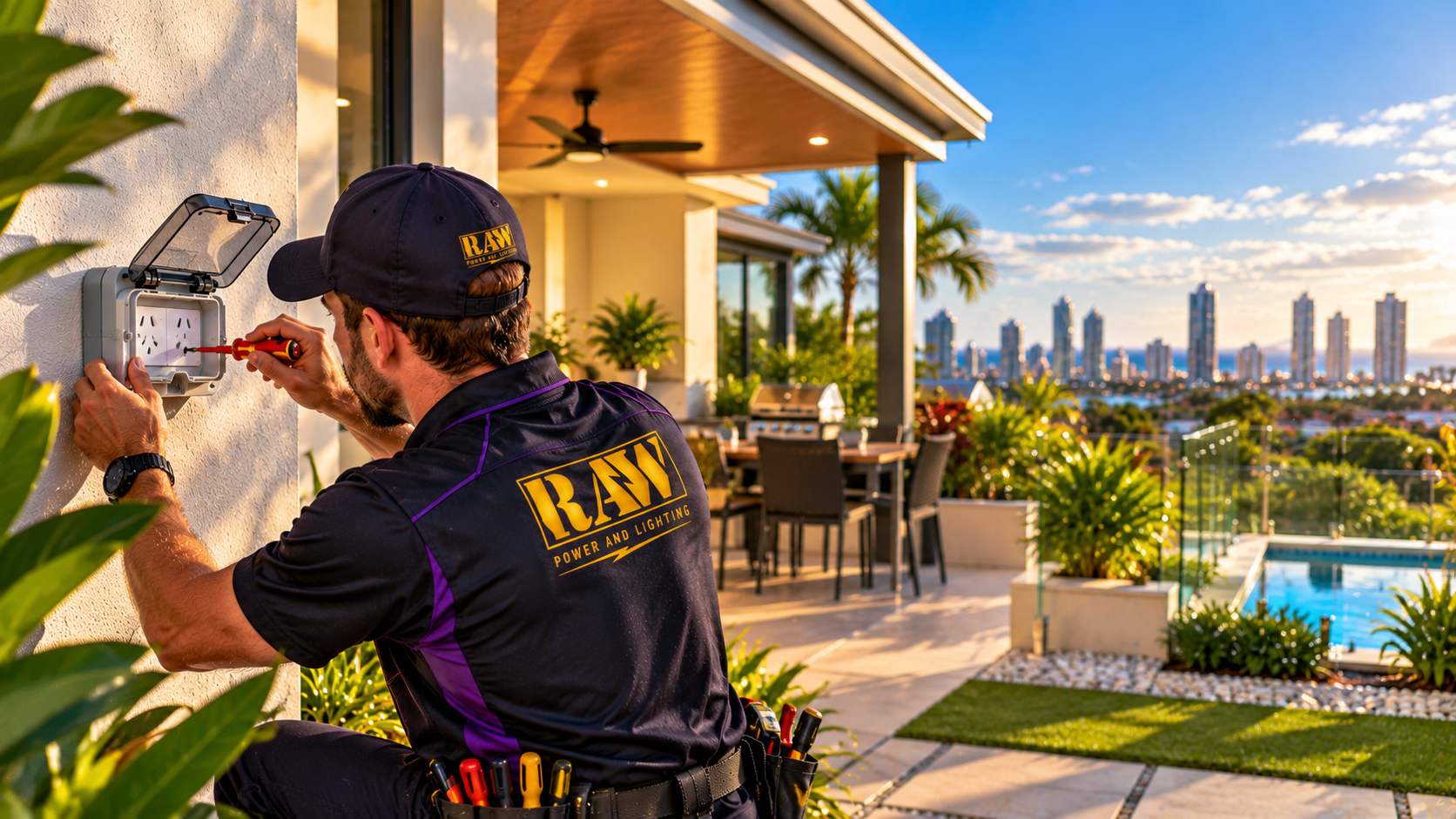
Outdoor living is a big part of life on the Gold Coast. Whether it’s enjoying a weekend barbecue, entertaining friends on the patio, maintaining the garden or spending time around the pool, having convenient access to electricity outdoors can make everyday activities easier.
But outdoor electrical installations require more consideration than simply adding another power point.
Unlike indoor outlets, outdoor power points are exposed to rain, humidity, heat, dust and changing weather conditions. They need to be correctly selected, positioned and installed to provide safe, reliable power.
If you’re considering Outdoor Power Point Installation Gold Coast, there are several important things to understand before getting started.
At Raw Power & Lighting, we provide residential and commercial electrical services across the Gold Coast, including Parkwood, Arundel, Southport and surrounding suburbs.
Here’s what homeowners should know about installing outdoor power points, choosing suitable locations and keeping outdoor electrical equipment safe.
1. Why Install Outdoor Power Points?
Outdoor power points can make your property more practical, convenient and enjoyable.
Rather than running extension leads from inside your home, a properly installed outdoor outlet provides a dedicated location to connect suitable electrical equipment.
Common uses include:
- Outdoor entertaining: Powering suitable appliances and equipment on patios, decks and alfresco areas.
- Garden maintenance: Connecting lawnmowers, hedge trimmers and other electric garden tools.
- Outdoor lighting: Providing power for suitable decorative and landscape lighting systems.
- Pool and spa areas: Supplying electricity to appropriate equipment where permitted and correctly installed.
- Outdoor kitchens: Supporting suitable appliances in barbecue and entertaining areas.
- Garages and sheds: Improving access to electricity for everyday tasks.
- Home maintenance: Providing convenient power for cleaning and maintenance equipment.
With more Gold Coast homeowners investing in outdoor living spaces, professionally installed power points can be a useful addition to residential properties.
However, the location, intended equipment and existing electrical installation all need to be considered.
2. Are Outdoor Power Points Different From Indoor Power Points?
Yes. Outdoor power points must be suitable for the environmental conditions in which they’re installed.
A standard indoor power point isn’t automatically suitable for an exposed outdoor location.
Outdoor outlets may require weather-resistant enclosures, protective covers and other features appropriate to their installation environment.
One important consideration is the equipment’s Ingress Protection (IP) rating.
An IP rating describes the degree of protection an enclosure provides against the entry of solid objects and water under specified test conditions.
For example, some outdoor electrical fittings are rated IP44, IP55 or IP66, depending on their design.
However, a higher IP rating isn’t automatically necessary or sufficient for every outdoor installation.
The correct equipment depends on factors such as:
- Exposure to rain and wind-driven water
- Whether the outlet is sheltered or fully exposed
- Proximity to garden irrigation or hoses
- Risk of water pooling or flooding
- Exposure to dust and debris
- Whether the outlet will be used while equipment is plugged in
- The manufacturer’s installation requirements
A licensed electrician can recommend a suitable fitting based on the actual conditions.
For homeowners seeking Electrical Services Gold Coast, choosing appropriate outdoor electrical equipment is an important part of a professional installation.
3. Where Should Outdoor Power Points Be Installed?
Choosing the right location is just as important as choosing the right power point.
A convenient position should also be practical, accessible and suitable for the surrounding environment.
Patios and Alfresco Areas
Outdoor entertaining spaces are among the most popular locations for additional power points.
A conveniently positioned outlet may be useful for lighting, suitable cooking appliances, entertainment equipment or other outdoor devices.
When planning installation, consider where furniture and appliances will be positioned.
The goal is to provide convenient access to electricity without creating unnecessary trip hazards or encouraging the use of long extension leads.
Gardens and Landscaping
Garden power points can be useful for maintenance equipment, outdoor lighting and suitable electrical accessories.
However, their location needs to account for sprinklers, rainwater, gardening activities and potential physical damage.
Garages and Sheds
Additional power points in garages and sheds can improve convenience for tools, chargers and general household equipment.
An electrician should assess the intended electrical load and whether the existing circuit is suitable.
Pool and Spa Areas
Electrical installations around swimming pools and spas require particular care.
Australian electrical installation requirements establish special conditions and restrictions for electrical equipment in defined pool and spa zones.
Not every location near a swimming pool is suitable for a power point.
The correct position and installation requirements must be determined by a licensed electrician familiar with the applicable standards.
Driveways and Carports
Outdoor outlets may also be useful in carports and driveway areas.
If you’re considering charging an electric vehicle, however, it’s important to discuss the intended charging arrangement with an electrician rather than assuming an ordinary outdoor socket will be appropriate.
The suitability of the circuit, charging equipment and installation needs to be assessed.
4. Do Outdoor Power Points Need Safety Switch Protection?
Safety switches, also known as Residual Current Devices (RCDs), are an important part of electrical safety.
They are designed to disconnect electricity quickly when certain types of electrical leakage faults are detected, helping reduce the risk of electric shock.
Queensland electrical installations are subject to applicable safety switch requirements, which vary depending on the installation and circumstances.
When installing a new outdoor power point, a licensed electrician must ensure the work complies with the relevant requirements, including appropriate RCD protection.
It’s important to remember that safety switches don’t eliminate every electrical risk.
They also don’t make damaged equipment, wet connections or unsafe electrical practices acceptable.
If your safety switch repeatedly trips when using an outdoor power point, stop using the affected equipment and have the cause investigated.
For homeowners needing a Residential Electrician Gold Coast, Raw Power & Lighting can assist with electrical fault finding, safety switches and related electrical work.
5. Can You Install an Outdoor Power Point Yourself?
In Queensland, installing or altering a fixed electrical power point is electrical work that must be performed by an appropriately licensed electrical worker.
Even if the installation appears straightforward, it involves connecting equipment to your property’s electrical system.
Incorrect installation can create risks including:
- Electric shock
- Electrical fires
- Water entering electrical equipment
- Overloaded circuits
- Damage to connected appliances
- Non-compliant electrical installations
DIY electrical work can also create legal and insurance complications.
Outdoor power point installation should always be left to a licensed electrician.
A professional installation involves more than mounting an outlet to a wall.
The electrician needs to consider the existing circuit, cable routing, protection, environmental exposure, intended use and required testing.
If you’re searching for an Electrician Parkwood, Electrician Arundel or a local electrician in Southport, working with a qualified local professional helps ensure the work is completed safely and in accordance with applicable requirements.
6. How Much Does Outdoor Power Point Installation Cost on the Gold Coast?
The cost of installing an outdoor power point can vary depending on the property and the work required.
There isn’t one fixed price that applies to every installation.
Factors that can influence the cost include:
Location: Installing a power point close to an accessible existing electrical supply may involve less work than installing one in a distant garden or detached structure.
Cable routing: Some installations require additional cable, conduit or more complex access through walls and other building areas.
Existing electrical circuits: An electrician needs to assess whether an existing circuit is suitable or whether additional circuit work is necessary.
Type of power point: The required weather protection, enclosure and intended application can affect equipment selection.
Switchboard requirements: Some properties may require additional protection or other electrical work to accommodate the installation.
Number of outlets: Installing several power points during one planned visit may be more practical than arranging separate installations.
Site conditions: Difficult access, underground cable routes or special installation environments may increase the scope of work.
The best approach is to explain where you want the outlet and what you intend to use it for.
A licensed electrician can then assess the requirements and provide an appropriate quote.
At Raw Power & Lighting, we believe in providing plain-English advice so homeowners understand the work being recommended.
7. Outdoor Power Points and Gold Coast Storm Season
Gold Coast weather is another important consideration when planning outdoor electrical installations.
During the warmer months, properties can experience heavy rainfall, thunderstorms, strong winds and periods of high humidity.
Even an appropriately rated outdoor power point can become unsafe if it’s damaged, incorrectly used or exposed to conditions beyond its design.
To help reduce risks:
- Keep protective covers closed as intended.
- Use only electrical equipment suitable for outdoor conditions.
- Avoid using damaged plugs, sockets or extension leads.
- Don’t place electrical connections where water can collect.
- Keep power points clear of debris and unnecessary moisture.
- Stop using fittings that show signs of damage or overheating.
- Have electrical equipment affected by flooding inspected before using it again.
If an outdoor power point has been submerged, don’t assume it’s safe once it dries.
Water can cause internal damage that isn’t immediately visible.
For more advice about preparing your property for severe weather, read our related article:
Gold Coast Storm Season: Essential Electrical Safety Checklist for Homeowners.
8. Common Mistakes Homeowners Should Avoid
When planning outdoor electricity, a few common mistakes can create unnecessary risks.
Using Indoor Extension Leads Outdoors
Indoor extension leads and power boards aren’t necessarily suitable for outdoor environments.
Using unsuitable equipment in wet or exposed conditions can increase the risk of electric shock and equipment damage.
Overloading an Outdoor Power Point
Connecting multiple high-demand appliances to one outlet can exceed the capacity of the outlet, circuit or associated equipment.
A licensed electrician can advise whether your intended use requires a different electrical arrangement.
Installing Outlets Too Close to Water
Locations near pools, spas and other wet areas can be subject to specific electrical installation restrictions.
Don’t assume an outlet is suitable simply because it has a weatherproof cover.
Ignoring Damaged Covers or Loose Fittings
Cracked covers, loose sockets and damaged enclosures can compromise the protection provided by an outdoor fitting.
Have damaged equipment assessed and repaired by a licensed electrician.
Choosing Convenience Over Safety
The most convenient position isn’t always the most suitable location.
A professional electrician can help identify a practical alternative that meets the relevant electrical requirements.
9. Should You Install One Outdoor Power Point or Several?
If you’re planning a new patio, garden renovation, outdoor kitchen or landscaping project, it can be worthwhile thinking about your future electrical needs.
For example, you might want:
- One outlet near the outdoor dining area
- Another in the garden for maintenance equipment
- A suitable supply for outdoor lighting
- Additional power in a shed or garage
Planning these requirements together can make the installation process more efficient and reduce the likelihood of needing further electrical work shortly afterwards.
However, the number of outlets that can be installed on a particular circuit depends on the existing electrical installation and anticipated loads.
A licensed electrician can help you determine the most appropriate arrangement.
10. Why Choose a Local Gold Coast Electrician?
Outdoor electrical work needs to suit both the property and the local environment.
Gold Coast homes can vary considerably, from established properties in Parkwood and Arundel to newer homes, coastal properties and commercial premises.
Factors such as building construction, exposure to weather, existing wiring and intended electrical loads can all affect the installation.
Working with a local electrician means you can discuss the specific requirements of your property and arrange appropriate electrical work.
At Raw Power & Lighting, we provide Electrical Services Gold Coast, including residential and commercial electrical installations, repairs and maintenance.
Our team assists customers throughout:
- Parkwood
- Arundel
- Southport
- Surrounding Gold Coast suburbs
Whether you’re installing a new outdoor power point, adding lighting to your patio or planning electrical improvements around your property, professional advice helps ensure the installation is suitable for its intended purpose.
Outdoor Electrical Maintenance: What Should You Look For?
Once outdoor power points are installed, they shouldn’t be forgotten.
Outdoor fittings can deteriorate over time due to exposure, accidental damage and general wear.
Homeowners can visually check for warning signs such as:
- Cracked or broken covers
- Loose or damaged fittings
- Discolouration or signs of overheating
- Water entering electrical enclosures
- Corrosion around exposed components
- Unusual buzzing or crackling sounds
- Safety switches tripping when equipment is used
Don’t open electrical fittings or attempt to investigate internal wiring.
If you notice any of these problems, stop using the affected equipment and arrange professional assessment.
For property owners, landlords and businesses, ongoing Electrical Maintenance Gold Coast can help identify electrical issues that need attention.
Outdoor Power Point Installation Gold Coast – Contact Raw Power & Lighting
Whether you’re upgrading your outdoor entertaining area, adding convenient power to the garden or improving electrical access around your property, outdoor power points can be a practical investment.
The key is ensuring they’re correctly positioned, suitable for the environment and professionally installed.
At Raw Power & Lighting, we’re a family-owned electrical business providing residential and commercial electrical services across the Gold Coast.
We focus on making the process straightforward with:
On-time guarantee
No call-out fees
Plain-English advice
Respect for your home and property
If you’re considering Outdoor Power Point Installation Gold Coast, our team can assess your requirements and recommend a suitable installation.
From Parkwood and Arundel to Southport and surrounding Gold Coast suburbs, Raw Power & Lighting is here to help with your electrical needs.
Contact Raw Power & Lighting today to discuss outdoor power point installation, electrical maintenance or other electrical services for your home or business.